Property
Your water and electricity are still in the seller’s name. Here is why that matters.
You bought a house in Costa Rica. The closing went fine. Months later the water bill arrives with somebody else’s name on it, and you assume it is cosmetic.
It is not.
What actually goes wrong
- You cannot resolve a billing problem on an account that is not yours. The institution will not discuss it with you, and they are right not to.
- Debt follows the service, not the person. If the previous holder left a balance, the disconnection lands on your house.
- You cannot request changes — a meter upgrade, a new connection, a payment arrangement — on an account in another name.
- It complicates your own sale. The next buyer’s attorney will find it, and it will slow down your closing at the worst possible moment.
- Some processes require proof of service in your name, including certain permits and residency-adjacent paperwork.
Why it happens so often
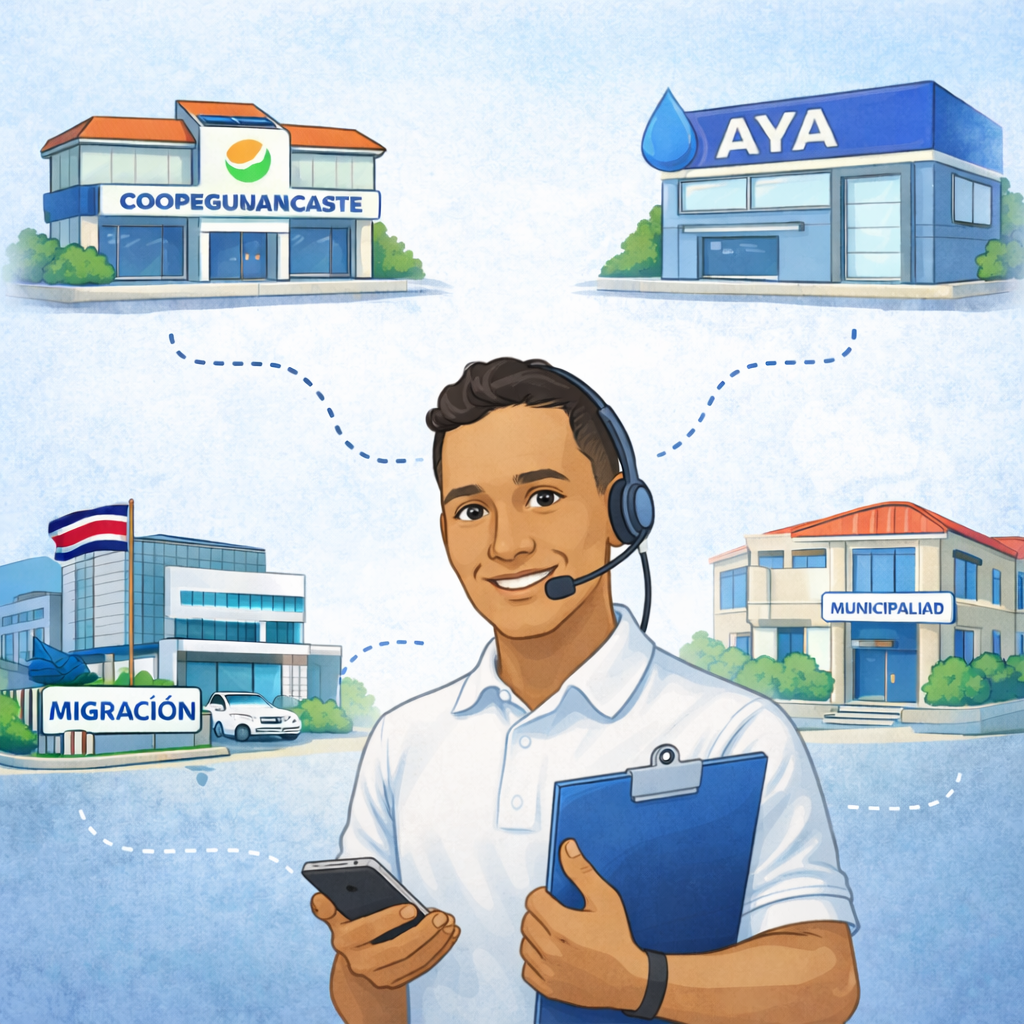
Because nobody owns the task. The closing attorney transfers the property. The utilities are separate institutions with separate procedures — AyA or your local ASADA for water, the electricity provider for power, the municipality for property tax — and none of them are told that the house changed hands.
Unless someone actively goes and does it, it does not happen.
What the transfer needs
It varies by institution, but generally: the deed showing you as owner, your identification, the existing account number, confirmation that the account is up to date, and in some cases the previous holder’s cooperation.
That last one is the reason to do it soon rather than eventually. The seller is reachable and cooperative in the first months after a sale. Three years later, they may be in another country and disinclined to sign anything.
Do it now, not later
This is a small, unglamorous task that costs very little to handle and quietly prevents several expensive problems. If you bought in the last few years and have never checked whose name the services are in, look at your next bill.